The Convention on International Trade in Endangered Species of Wild Fauna and Flora (CITES) protects over 40.900 endangered species – about 6.610 species of animals and 34.310 species of plants – against over-exploitation, by regulating international trade. The EU is an important region of destination, transit and origin for many of the species protected under CITES.
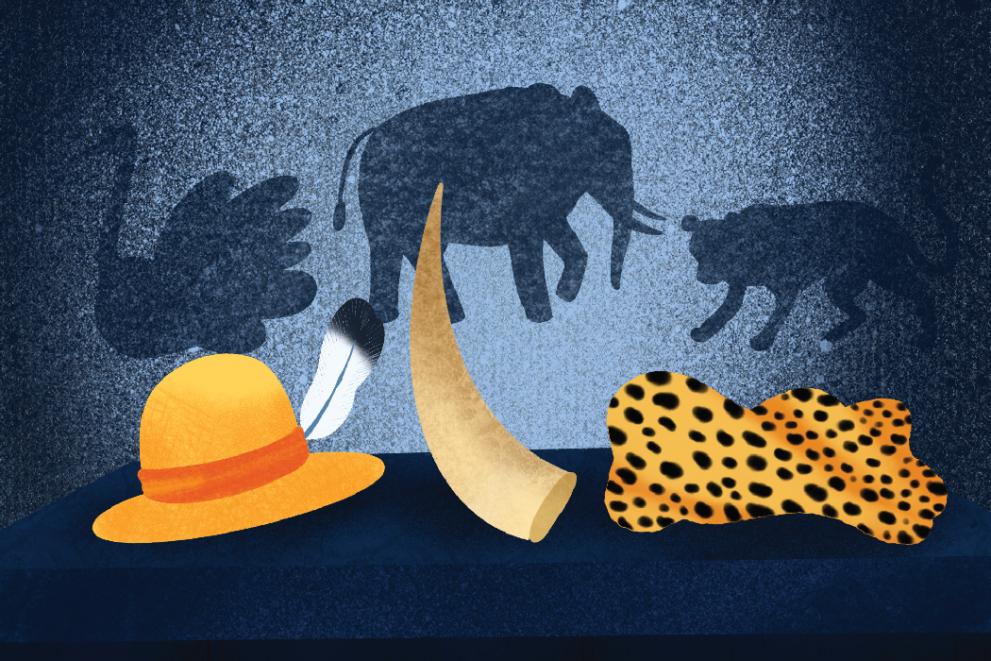
This trade is diverse, ranging from live animals and plants to products derived from them. This includes food products, leather goods, timber, dead specimens, parts (such as ivory) or derivatives (such as medicines made from animals or plants). These activities could harm wildlife populations, and CITES is responsible for their regulation.
Objectives
CITES aims to ensure that international trade in wild animals and plants does not threaten their survival.
Law
International law
CITES (Convention on International Trade in Endangered Species of Wild Fauna and Flora) is an international agreement between governments that came into force in 1975. It comprises 184 States and regional economic integration organisations worldwide, called “parties.” Each party has designated its authority/authorities responsible for regulating the Convention’s activities. The EU became an official party to CITES in 2015, reinforcing its role as a strong actor in global efforts to protect the environment and prevent illegal trade.
The Convention stipulates that all imports, exports and re-exports of species covered by the convention have to be authorised through a system of permits and certificates.
Species covered by CITES have different degrees of protection through trade regulation depending on the degree of threat they are facing. They are listed in three Appendices, according to the degree of protection they need.
- Appendix I includes species threatened with extinction. Trade in specimens of these species is permitted only in exceptional circumstances.
- Appendix II includes species not necessarily threatened with extinction, but in which trade must be controlled to avoid utilization incompatible with their survival.
- Appendix III contains species that are protected in at least one country, which has asked other CITES Parties for assistance in controlling the trade. Changes to Appendix III follow a distinct procedure from changes to Appendices I and II, as each Party’s is entitled to make unilateral amendments to it.
Species+ provides a centralised portal for accessing more detailed information on species in relation to international trade, including information on EU import restrictions.
EU regulations
The “EU wildlife trade regulations” are a set of EU laws implemented uniformly in all EU countries, to enforce the provisions of CITES. The EU has enacted strict rules to ensure that wildlife products only enter the EU market if they are of legal and sustainable origin. Enforcement of the regulations remains the competence of each EU country.
-
Basic Regulation
Council Regulation [EC] No 338/97 on the protection of species of wild fauna and flora by regulating trade therein lays down the overall provisions for import, export and re-export, as well as internal EU trade in specimens of species. The species are listed in its four Annexes.
Annex A includes:
- All CITES Appendix I species, except where EU Member States have entered a reservation
- Some CITES Appendix II and III species, for which the EU has adopted stricter domestic measures
- Some non-CITES species
Annex B includes:
- All other CITES Appendix II species, except where EU Member States have entered a reservation
- Some CITES Appendix III species
- Some non-CITES species
Annex C includes:
- All other CITES Appendix III species, except where EU Member States have entered a reservation
Annex D includes:
- Some CITES Appendix III species for which the EU holds a reservation
- Some non-CITES species in order to be consistent with other EU regulations on the protection of native species, such as the Habitats Directive and the Birds Directive
Amendments to the species listed in the annexes are implemented via a Commission regulation. Moreover, the Basic Regulation allows the possibility of restricting the introduction of certain species into the EU, after consulting with the species’ country of origin.
-
Implementing Regulation
Commission Regulation [EC] No 865/2006 (as amended) lays down detailed rules and addresses practical aspects for the implementation of Council Regulation (EC) No 338/97.
-
Permit Regulation
Commission Implementing Regulation [EU] 792/2012 lays down rules for the design of permits, certificates and other documents provided for in Council Regulation (EC) No 338/97 and Commission Regulation (EC) No 865/2006.
-
Suspension Regulation
Council Regulation (EC) No 338/97 provides the Commission with the possibility to restrict the introduction of species into the European Union. This is done after consultation with the countries of origin concerned and taking into account any opinion of the Scientific Review Group. The most recent Suspension Regulation (2023/2770) was adopted on 12 December 2023.
EU wildlife action plans
Wildlife trafficking has become one of the most profitable criminal activities worldwide, with devastating effects for biodiversity. Europe is currently a destination market, a hub for trafficking in transit to other regions, and, for some species, the source region for illegal trade.
In November 2022 the Commission adopted the revised EU Action Plan against wildlife trafficking. The revised plan has four main priorities
- To prevent wildlife trafficking and addressing its root causes, by reducing consumer demand for illegally traded wildlife, supporting sustainable livelihoods in source countries, and tackling corruption at all levels;
- To strengthen the legal and policy framework against wildlife trafficking, by aligning EU and national policies with international commitments and latest evidence, and engaging with civil society and business sectors involved in the wildlife trade;
- To enforce regulations and policies to fight wildlife trafficking effectively, by improving the rate of detection of illegal activities within the EU, focusing on capacity-building along the entire enforcement chain, encouraging coordination and cooperation within and between Member States and increasing efforts in tackling the online aspects of wildlife trafficking;
- To strengthen the global partnership of source, consumer and transit countries against wildlife trafficking, by enhancing their capacity and improving cooperation between the relevant actors in the EU Member States and their counterparts in key non-EU countries.
The revised action plan builds on a previous action plan which covered the period 2016 - 2020.
Implementation
Expert groups
Several committees and expert groups assist the EU in enforcing legislation to protect endangered species and end illegal trafficking. They meet on a regular basis.
The Committee on Trade in Wild Fauna and Flora, comprising representatives from national CITES management authorities and chaired by the Commission, meets 3-4 times a year to discuss the elaboration of legal acts and facilitate the adoption of EU positions at CITES meetings.
The Group of Experts of the Competent CITES Management Authorities, comprising representatives from national CITES management authorities and chaired by the Commission, meets regularly to provide advice and expertise to the Commission on wildlife trade issues that do not fall under the competence of the Committee.
The Enforcement Group, comprising representatives from national authorities, is responsible for monitoring how EU countries enforce and implement wildlife trade rules.
The Scientific Review Group comprises representatives from national scientific authorities. It meets regularly to examine scientific questions relating to the application of the rules.
Guidance
The EU wildlife trade laws are complemented by more specific guidance, developed by the Commission in consultation with EU countries, to facilitate the application of the rules across the EU.
- Guidance document on the export, re-export and intra-EU trade of captive born and bred live tigers and their parts and derivatives
- Guidance document on live animals bred in captivity under the EU Wildlife Trade Regulations
- Revised Guidance document on EU regime governing intra-EU trade and re-export of ivory
See also:factsheet (available in all EU languages): Ivory trade in the EU : strict rules to protect elephants in the wild, 2022 - Revised EU Guidance on Ivory trade - Questions and Answers on musical instruments
- Guidance on Worked Specimens under the EU Wildlife Trade Regulations
- Guidance document on the verification of legality in timber trade
- Guidance document on the Proof of legal acquisition for live animals of Annex B species and necessary documentary evidence.
- Guidance document on the export, re-export, import and intra-Union trade of rhinoceros horns (2019)
Practical advice
EU entry points – places of introduction and export (31/10/2022)
Before you purchase your pet or plant, check whether the species is listed in the annexes to the EU wildlife trade laws. If yes, trade restrictions and permit requirements apply. Your national CITES management authority should be able to advise you on requirements relating to the purchase of the pet or plant and the documents you should receive from the dealer. Check where the seller is based and find out the origin of the species you are buying, as these will affect the documentation required. There may also be sanitary, veterinary, agricultural or other documentary requirements. Be cautious when buying CITES-listed specimens on the internet, including auction sites, as they may not be legal.
If you wish to travel with a legally acquired pet of a listed species, specific certificates can be obtained from your national managing authority. You don’t need specific permits or certificates if travelling inside the EU’s border-free Schengen area. Personal ownership certificates may only be issued for legally acquired live animals held for personal, non-commercial purposes. Council Regulation (EC) No 1/2005 delivers the framework for the protection of animals during transportation.
It is important to prevent exotic animals from moving into the natural habitat as this might pose a threat to both the habitat and human safety. Several member countries have specific regulations regarding the exhibition of dangerous and/or poisonous animals to the public, for example at fairs.
If you own exotic species, you should be aware that they may pose a threat to European species and habitats if they escape or are voluntarily released into the wild. These species may adapt to and breed in their new environment, becoming "invasive" or "alien" species, damaging global biodiversity and economies.
If you wish to bring into the EU souvenirs for your own personal use that are made of plants or animals, you should be aware that for many species listed in the CITES appendices or the annexes of the EU wildlife trade laws you need a permit or certificate.
In the absence of such documents, the souvenirs may be seized by customs, and you could be risking a hefty fine.
Reports and studies
1. Reports in line with CITES requirements
1.1 Annual trade reports can be assessed directly via the CITES Trade Database
1.2 Annual trade reports – EU analyses
1.3 Implementation reports – EU compilations
1.4 Implementation reports - EU analyses
1.5 Annual illegal trade reports / Overview of seizures
2. Studies and Reports on Wildlife Trade related to fauna and flora
2.1 Reports related to trade in fauna
2.2 Reports related to trade in flora
2.3 Other reports related to wildlife trade
3. Reference guide (Detailed information on the implementation of the Wildlife Trade Regulations of the European Union)
Related links
Main laws: Council Regulation [EC] No 338/97, Commission Regulation [EC] No 865/2006, Commission Implementing Regulation [EU] 792/2012, EU action plan against wildlife trafficking (revised)
Related topics: Nature and biodiversity
Related strategies: Biodiversity strategy for 2030, Environment action programme to 2030, Forest Strategy
Related Commission priorities: European Green Deal